

Table of Contents
Many people find themselves pushing through each day while feeling mentally and emotionally drained. You may still be getting through your daily responsibilities, but even routine tasks feel more demanding than they once did. What begins as a stressful period can gradually develop into a sense of exhaustion that is difficult to shake.
When stress continues for weeks or months, it affects the way you think, feel, and respond to everyday challenges. In these situations, stress therapy provides an opportunity to understand what is contributing to that pressure. It also helps you develop healthier ways to manage it. Understanding why mental exhaustion develops is often the first step towards feeling more balanced and in control again.
What Does Mental Exhaustion Actually Feel Like?
Mental exhaustion is a state of ongoing emotional and cognitive fatigue caused by prolonged stress. It can make even simple decisions feel difficult and reduce your ability to concentrate. It may also affect your mood and leave you feeling overwhelmed by everyday responsibilities. Unlike ordinary tiredness, mental exhaustion often persists despite getting enough rest because the mind remains under continuous strain.
One of the most frustrating aspects of being mentally exhausted is that it is often invisible to others. Friends, family members, or colleagues may see someone who continues to function normally. Privately, however, you may feel as though you are constantly running on empty. This disconnect can make it difficult to explain what you are experiencing or even recognise that stress may be the underlying cause.
Additionally, many people describe feeling as though their brain never truly switches off. Thoughts may continue racing long after the working day has ended. This can make it difficult to relax or enjoy time with family and friends. Even activities that were once enjoyable can begin to feel like obligations rather than opportunities to recharge.
Mental exhaustion can also affect confidence. You may start questioning your decisions more than usual and second-guessing conversations. You may also worry excessively about making mistakes. Tasks that previously felt manageable may suddenly seem far more demanding. As confidence falls, stress can increase and deepen mental fatigue.
Although everyone’s experience is different, common signs of mental exhaustion include:
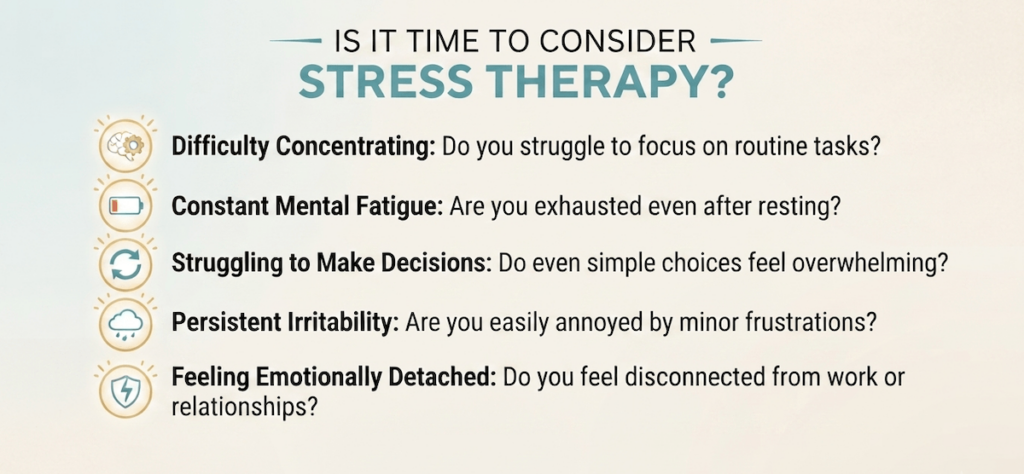
- Difficulty concentrating for extended periods.
- Feeling emotionally drained at the end of most days.
- Becoming easily irritated by minor frustrations.
- Struggling to make decisions.
- Finding it difficult to stay motivated.
- Feeling detached from work or relationships.
- Worrying constantly, even when there is no immediate problem to solve.
Experiencing one or two of these symptoms occasionally is perfectly normal. However, when they become part of daily life and continue for several weeks, they may indicate that ongoing stress is taking a greater toll than you realise.

Why Can Stress Become So Overwhelming?
Stress becomes overwhelming when the demands placed on your mind consistently exceed your ability to recover. Short periods of stress are a normal part of life. However, ongoing pressure without adequate rest or support can gradually affect how you think and feel. Over time, your mental and emotional resources become depleted. This makes even routine responsibilities feel increasingly difficult.
You may not notice this change immediately. For many people, stress builds gradually rather than appearing all at once. What starts as a busy period can slowly become a constant background pressure that never fully disappears. As a result, you may begin feeling exhausted, irritable, or overwhelmed without fully understanding why.
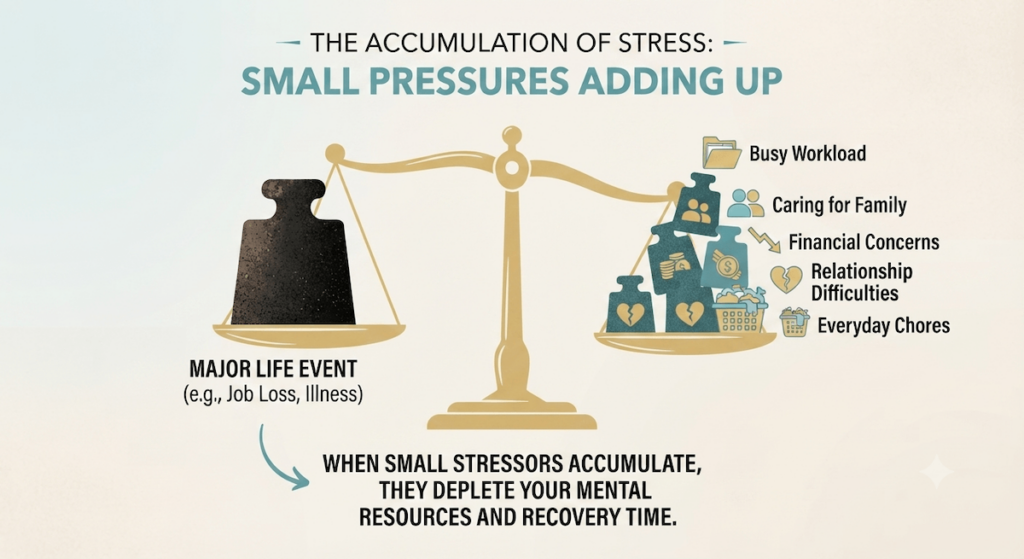
Some people assume stress is always linked to one major event. In reality, mental exhaustion is often difficult to recognise because stress does not always come from a single source. Instead, it is frequently the result of numerous smaller pressures accumulating over time. A busy workload, caring for children or ageing parents, and financial concerns are common factors. Relationship difficulties, health worries, and everyday chores also add to the burden. They may seem manageable on their own. Together, however, they can create a constant sense of pressure. This leaves little opportunity for your mind to fully recover.
Stress also affects people differently. Two individuals may face similar circumstances yet experience very different levels of emotional strain. The way people respond to prolonged pressure is shaped by their experiences, expectations, and support network.
In some cases, the pressure people place on themselves can make stress even harder to manage. Some individuals feel they should always be productive or capable of handling everything without asking for help. As a result, they may ignore early signs of stress because they believe everyone else is coping better than they are.
Over time, this mindset can make stress increasingly difficult to manage. Instead of recognising mental fatigue as a signal that something needs to change, people may push themselves even harder. Rest becomes something to earn rather than a necessary part of maintaining wellbeing. This can have consequences beyond your thoughts and behaviours.
The brain is designed to respond to challenges, but it is also designed to recover afterwards. When stress becomes constant, recovery is often limited. As a result, the body’s stress response can remain activated for longer than intended. Over time, this can make everyday pressures feel far more difficult to manage. This prolonged state of alertness can affect many areas of daily life. It may become harder to sleep well, think clearly, or maintain healthy relationships.
It is important to remember that becoming overwhelmed does not mean you are weak or incapable. Often, it reflects the simple reality that you have been carrying more than your mind has had the opportunity to process. Recognising this is often the first step towards making positive changes.
How Does Stress Therapy Help You Recover?
Stress therapy helps people recover by providing a safe and structured space to explore their stress. It can help identify unhelpful patterns and develop healthier ways of coping. Rather than simply offering temporary relief, therapy aims to build practical skills that improve emotional wellbeing and make future challenges feel more manageable.
One of the first steps is exploring what is contributing to your stress. Sometimes, the causes are obvious, such as workplace demands, family responsibilities, or financial concerns. In other cases, the underlying issues are less clear. You may have become so accustomed to living with constant pressure that it feels normal. At the same time, it may be having a significant impact on your wellbeing.
Counselling also helps you recognise the patterns that can keep stress going. For example, some people feel unable to say no to additional responsibilities because they worry about disappointing others. Others place extremely high expectations on themselves and believe they must perform perfectly in every area of life. These habits often develop gradually and may go unnoticed until they begin affecting mental health.
As these patterns become clearer, therapy focuses on developing practical alternatives. This may involve learning healthier ways to manage difficult emotions or improving communication. It may also include setting realistic expectations or creating routines that allow time for rest and recovery.
Some people benefit from one-to-one counselling, while others may also find stress management classes helpful in learning practical ways to cope with ongoing pressure. Whether support is provided individually or in a group setting, the goal is to help people develop healthier ways of responding to stress.
Another valuable aspect of stress counselling is having the opportunity to speak openly without feeling judged. Many people spend so much time supporting others that they rarely have the chance to discuss their own worries honestly. Being listened to with empathy can help reduce feelings of isolation. It can also provide a fresh perspective on situations that have felt impossible to resolve alone.
Many people begin therapy hoping to find a way to make stress disappear. While it would be unrealistic to expect life to become completely free of pressure, therapy can change how you experience and respond to difficult situations. As your self-awareness grows, situations that once felt overwhelming often become easier to manage. Many people find they respond to challenges with greater confidence and perspective.
Over time, the therapeutic process encourages greater self-awareness. Rather than automatically reacting to every stressful situation, you become better able to pause and assess what is happening. This allows you to choose a response that supports your wellbeing instead of adding to your stress.

Can Stress Therapy Change How You Respond to Pressure?
Stress therapy cannot remove every challenge from your life, but it can help you respond to pressure in healthier and more constructive ways. As you develop greater self-awareness and practical coping strategies, situations that once felt overwhelming may become easier to navigate with confidence and perspective.
Many people believe that becoming less stressed means eliminating all sources of pressure. In reality, most of us will continue to face demanding periods at work, family responsibilities, unexpected setbacks, and difficult decisions. The difference often lies not in the situation itself. It lies in how we respond to it.
One of the most noticeable changes people often experience is improved emotional regulation. Instead of feeling immediately overwhelmed, they become better able to recognise rising stress levels. This creates space to respond thoughtfully rather than reacting impulsively.
Therapy can also improve decision-making. Mental exhaustion often makes even straightforward choices feel difficult because your mind is already overloaded. As stress becomes more manageable, many people notice greater mental clarity. They may also feel more confident making everyday decisions without constantly second-guessing themselves.
Another common area of improvement involves boundaries. People who feel mentally exhausted frequently take on more than they can realistically manage. They may struggle to decline requests, worry about letting others down, or believe they should always be available. Therapy can help challenge these beliefs. It can also encourage healthier boundaries that support overall wellbeing.
Relationships often benefit as well. Chronic stress can make people more irritable, withdrawn, or emotionally unavailable without realising it. As stress levels reduce, communication often becomes calmer and more open. Relationships may begin to feel more supportive and less like another source of pressure.
Importantly, progress is rarely about becoming calm all the time. Everyone experiences stress from time to time. Instead, the goal is to increase resilience so that difficult periods feel temporary rather than overwhelming. You become better equipped to recover after setbacks instead of remaining stuck in a prolonged cycle of exhaustion.
When Should You Consider Stress Therapy?
You may benefit from stress therapy if ongoing pressure is affecting your thoughts, emotions, relationships, work, or daily life. You do not need to wait until you reach complete burnout. Seeking support early can often prevent stress from becoming more difficult to manage over time.
Many people delay therapy because they believe someone else has it worse. They convince themselves that they should simply cope, work harder, or wait until things become less busy. Unfortunately, prolonged stress rarely improves simply because it is ignored. In many cases, it gradually becomes more deeply established.
If you regularly wake up feeling tired despite sleeping, struggle to switch off in the evenings, or constantly feel as though your mind is racing, these may be signs that stress has become more than a temporary reaction to a busy week.
You may also notice changes in your behaviour. Perhaps you have become less patient with your partner or children, withdrawn from social activities, or stopped enjoying hobbies that once helped you relax. Some people procrastinate because every task feels mentally draining. Others stay constantly busy because slowing down allows stressful thoughts to surface.
Physical symptoms can also accompany prolonged stress. Headaches, muscle tension, digestive discomfort, and changes in sleep are all common ways the body responds when stress continues over an extended period. While these symptoms can have many causes, persistent stress is often an important factor worth exploring.
Seeking support does not mean you have failed to cope. Instead, it reflects an understanding that your wellbeing deserves attention before stress begins affecting more areas of your life. Many people find that the earlier they address ongoing stress, the easier it becomes to make positive and lasting changes.

Is Stress Therapy Only for Severe Stress?
No, stress therapy is suitable for people experiencing a wide range of stress levels, not only those facing a crisis. Many people seek therapy because they want to manage ongoing pressure more effectively, improve their wellbeing, and prevent stress from becoming more serious in the future.
Despite this, many people still associate therapy with crises or severe emotional distress. This belief can prevent people from seeking support until they feel completely overwhelmed.
In reality, stress exists on a spectrum. Some people attend therapy because work has become increasingly demanding. Others are adjusting to parenthood, caring responsibilities, relationship changes, retirement, or other significant life transitions. These experiences are part of everyday life. However, they can still create considerable emotional strain.
Since stress affects people in different ways, there is no universal threshold for seeking support. Remember, talking to a counsellor is not about deciding whether your problems are serious enough. Instead, it focuses on understanding how your current circumstances are affecting you personally. Two people can experience the same situation in very different ways, and both experiences are valid.
Early support can also be preventative. Learning effective coping strategies before stress becomes overwhelming may reduce the likelihood of prolonged mental exhaustion. It can also help you navigate future challenges with greater confidence.
Many people who begin therapy say they wish they had sought support sooner. Rather than waiting until stress begins affecting every aspect of life, they discover that talking to someone earlier could have helped them feel more balanced and in control.

What Can You Expect During Stress Therapy?
Stress therapy usually begins with a conversation about what has been happening in your life, how stress is affecting you, and what you hope to achieve. Sessions are collaborative and confidential. They are also tailored to your individual circumstances, allowing you to work at a pace that feels comfortable.
There is no single approach that suits everyone because the causes of stress vary from person to person. During the first few sessions, your therapist will usually explore the situations contributing to your stress. They will also discuss how long these issues have been affecting you and the impact they are having on different areas of your life.
As therapy progresses, you may begin identifying patterns that were previously difficult to recognise. These might include perfectionism, people-pleasing, self-criticism, avoiding difficult conversations, or feeling responsible for solving everyone else’s problems. Understanding these patterns is often an important step towards changing them.
Sessions are not simply about talking through problems. They also focus on developing practical skills that you can use between appointments. Depending on your circumstances, this may include strategies for managing anxious thoughts or improving emotional regulation. It may also involve setting healthier boundaries or creating routines that support a better work-life balance.
Your therapist will not tell you what decisions to make or judge the choices you have made. Instead, they will help you explore your thoughts and feelings, consider different perspectives, and develop greater confidence in finding solutions that work for your own life.
Progress rarely follows a perfectly straight line. Some sessions may feel emotionally challenging, while others may leave you with a greater sense of clarity and relief. Over time, many people notice that they feel better equipped to handle situations that previously caused significant stress. This allows them to move through life with greater confidence and resilience.

In conclusion, feeling mentally exhausted is not something you simply have to accept as part of modern life. While periods of stress are unavoidable, ongoing mental exhaustion is often a sign that your mind has been carrying more than it has had the opportunity to process. Recognising this is not a sign of weakness. It is an important step towards protecting your wellbeing.
Stress therapy offers more than a chance to talk about what is happening. It helps you understand what is contributing to your stress and develop healthier ways of coping. Over time, this can help you build the resilience needed to manage future challenges with greater confidence. You do not need to wait until you reach burnout before seeking support. Taking action early can often make recovery smoother and help you regain a greater sense of balance in everyday life.
Has stress started to feel harder to manage than it used to? Call us today on 01 524 0708 to arrange a confidential appointment and discuss how stress therapy may help. Taking that first step can help you feel more like yourself again.