
A panic attack can feel terrifying when it happens suddenly. Your heart races, your chest tightens, your breathing changes, and your body reacts as though something dangerous is happening, even when there is no immediate threat around you. Many people genuinely believe they are having a serious medical emergency during their first panic attack because the physical symptoms feel so intense and convincing.
What often becomes just as difficult as the attack itself is the fear of it happening again. You may begin monitoring your body constantly, avoiding certain situations, or feeling anxious in places that once felt normal. Panic attack counselling can help you understand what is happening physically and emotionally while giving you practical support to regain a stronger sense of control and stability.
Why Panic Attacks Can Start Affecting Everyday Life
Panic attacks rarely stay limited to isolated moments of fear. For many people, the anticipation of another attack gradually begins affecting everyday decisions, routines, and confidence levels in ways that feel emotionally exhausting.
You may start avoiding places where previous attacks occurred. Public transport, shopping centres, busy roads, social situations, or even quiet moments alone can begin feeling emotionally charged because your brain starts associating those environments with danger.
This avoidance often develops slowly at first. You might change small habits without fully noticing. Over time, however, your world can begin shrinking as more situations start feeling unsafe or unpredictable.
The emotional impact extends beyond the panic attacks themselves. Constantly worrying about your body’s reactions can affect concentration, sleep, work performance, and relationships. Some people become emotionally drained from feeling permanently “on alert” throughout the day.
There is also frustration around not fully understanding why the attacks are happening. Panic can feel random and uncontrollable, which naturally increases fear. The less predictable the attacks feel, the harder it often becomes to trust your own body and emotions.
This is why many people eventually seek counselling. The goal is not simply stopping panic in isolated moments, but reducing the overall fear cycle that starts shaping daily life.
How Professional Support Helps Break the Panic Cycle
Panic attack counselling can often help you feel better faster by helping you understand your symptoms, identify anxiety patterns, and develop healthier responses before fear becomes more deeply ingrained. While recovery is usually gradual rather than instant, many people experience relief simply from understanding what is happening to them more clearly.
One of the biggest benefits of counselling is reducing uncertainty. Panic attacks feel frightening partly because they seem unpredictable and physically alarming. Understanding the body’s stress response often helps reduce some of the fear surrounding the symptoms themselves.
Counselling also helps identify patterns that may be contributing to the attacks. Stress, emotional overwhelm, unresolved anxiety, burnout, health fears, and ongoing pressure can all influence panic responses differently from person to person.
Early support can be particularly helpful because panic-related avoidance tends to strengthen over time. The longer fear shapes behaviour patterns, the harder it can become emotionally to re-engage with avoided situations confidently.
Importantly, counselling is not about forcing you to “calm down” or simply think positively. Panic attacks involve genuine physical and emotional reactions. Effective counselling acknowledges that reality while helping you respond to those reactions more safely and confidently over time.
For many people, feeling understood and supported already creates a meaningful sense of relief. Panic often becomes less overwhelming once you no longer feel completely alone with it.
What Happens During Panic Attack Counselling?
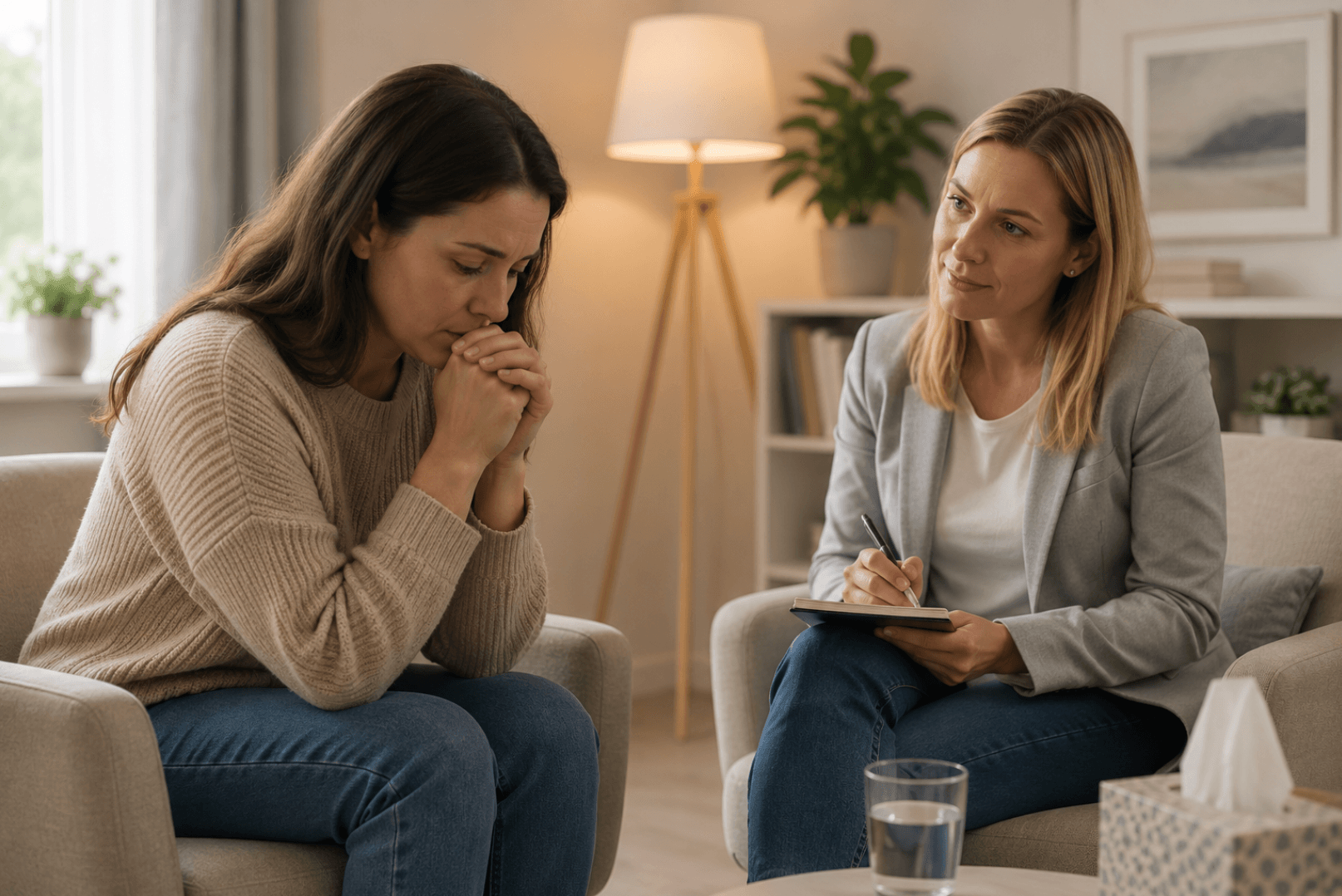
Panic attack counselling usually begins with understanding your experiences, symptoms, triggers, and the impact anxiety is having on your daily life. The process is typically gentle and collaborative rather than overwhelming or confrontational.
In early sessions, you may talk about when the panic attacks began, what situations feel difficult, and how your body reacts during episodes of panic. Counsellors often help explain the physical stress response in simple and reassuring ways so the symptoms feel less mysterious and frightening.
The sessions may also explore thought patterns connected to panic. Many people begin fearing the physical sensations linked to anxiety itself. A rapid heartbeat, dizziness, or shortness of breath can quickly trigger catastrophic thinking once your mind starts associating those sensations with danger.
Counselling helps interrupt this cycle gradually. Instead of immediately fearing the sensations, you begin learning how anxiety affects the nervous system and why the body reacts so intensely during periods of heightened stress.
Practical coping strategies are often introduced as well. These may include grounding techniques, breathing exercises, emotional regulation tools, or ways to respond differently when panic symptoms begin rising.
Importantly, the pace usually adapts to your comfort level. Panic attack counselling is not about forcing exposure immediately or pushing you into distressing situations before you feel emotionally ready.
Over time, many people notice that understanding their panic response reduces some of the fear attached to it. That shift alone can begin weakening the intensity of the overall anxiety cycle.
Why Panic Attacks Often Feel Physically Dangerous
One reason panic attacks feel so frightening is that the physical symptoms genuinely mimic danger signals within the body. Your nervous system activates a fight-or-flight response designed to protect you during perceived threat, even when no external danger is actually present.
Panic attacks can cause rapid heartbeat, chest tightness, dizziness, shaking, sweating, nausea, tingling sensations, and difficulty breathing. Because these symptoms overlap with serious medical concerns, panic attacks often feel physically dangerous in the moment.
The body’s adrenaline response intensifies everything quickly. Once fear rises, your breathing may change, muscle tension increases, and your awareness of bodily sensations becomes stronger. This heightened focus can make the symptoms feel even more alarming.
Many people then begin fearing the symptoms themselves. Instead of simply experiencing anxiety, you become anxious about becoming anxious again. This creates a reinforcing loop where fear of panic increases the likelihood of future panic episodes.
Understanding this process does not magically remove anxiety overnight, but it often reduces the sense of mystery surrounding the attacks. Counselling helps separate the feeling of danger from actual danger more clearly over time.
This distinction matters because panic attacks may feel catastrophic emotionally while still being treatable and manageable with proper support.
How Avoidance Can Make Anxiety Feel Worse Over Time
Avoidance often begins as a completely understandable attempt to protect yourself. If a panic attack happened in a supermarket, on a motorway, or during a crowded event, naturally, you may start feeling hesitant about returning to those situations.
The difficulty is that avoidance can quietly reinforce fear over time. Each avoided situation teaches the brain that the environment itself is dangerous, even when the actual problem is the anxiety response associated with it.
Gradually, confidence can shrink. Some people begin avoiding travel, social plans, exercise, shopping, or unfamiliar places because they fear panic symptoms returning unexpectedly.
This creates frustration because life starts revolving around prevention rather than freedom. You may spend large amounts of emotional energy trying to avoid situations where panic could happen instead of enjoying normal daily experiences.
Panic attack counselling helps address this pattern carefully and gradually. The goal is not to force you into overwhelming situations immediately. It is helping you rebuild trust in your ability to tolerate anxiety symptoms without feeling controlled by them.
Over time, reducing avoidance often becomes a major turning point in recovery because confidence starts returning alongside emotional stability.
Can Counselling Stop Panic Attacks Completely?
Counselling can significantly reduce the frequency, intensity, and emotional impact of panic attacks, although recovery experiences vary from person to person. Many people find that panic becomes far more manageable once they understand the anxiety cycle and learn healthier ways to respond to symptoms.
For some individuals, panic attacks eventually stop happening altogether. Others may still experience occasional anxiety symptoms but feel much less frightened by them. This shift matters because fear itself often fuels the panic cycle.
Counselling focuses not only on symptom reduction but also on emotional resilience. You begin recognising that physical sensations associated with anxiety do not automatically mean danger.
This change in interpretation can reduce escalation during stressful moments. Instead of immediately catastrophising normal stress responses, you become more able to regulate your reactions calmly.
Recovery also involves rebuilding confidence gradually. Many people begin counselling feeling trapped by fear and uncertainty. Over time, regaining trust in your own body and emotional responses often becomes one of the most meaningful improvements.
The process usually happens through consistent support rather than dramatic overnight change. Small emotional shifts often build into significant long-term progress.
How Panic Attack Counselling Supports Long-Term Recovery
Panic attack counselling supports long-term recovery by helping you understand both the symptoms themselves and the deeper emotional patterns contributing to anxiety over time. Rather than focusing only on isolated panic episodes, counselling helps address the broader fear cycle surrounding them.
Stress, burnout, perfectionism, unresolved emotional pressure, and chronic anxiety may all influence panic responses differently. Counselling creates space to explore these factors without judgement or pressure.
Emotional regulation skills are another important part of recovery. Many people learn how to recognise rising anxiety earlier and respond before panic escalates fully.
Confidence-building also plays a major role. As fear gradually decreases, avoided situations often begin feeling more manageable again. Small experiences of success can slowly rebuild emotional trust and independence.
Long-term recovery usually involves becoming less afraid of anxiety itself. Panic symptoms may still feel uncomfortable occasionally, but they no longer dominate your decisions or sense of safety in the same way.
This shift can significantly improve the quality of life because the focus moves away from constant fear management and back towards normal living again.
When Should You Seek Professional Support?
Professional support is usually worth considering when panic attacks begin affecting your daily functioning, emotional well-being, relationships, sleep, or confidence significantly. Waiting until symptoms become more severe can make the anxiety cycle more difficult to break over time.
Frequent panic attacks, ongoing fear of future attacks, or increasing avoidance behaviours are all important signs that support may help. Some people also experience constant background anxiety between panic episodes, which can become exhausting over time.
Sleep disruption, irritability, concentration problems, and social withdrawal may develop gradually as well. Even when panic attacks themselves are occasional, the surrounding anxiety can still affect daily quality of life substantially.
Seeking support early does not mean your anxiety is “serious enough” to justify help. Counselling is not reserved only for crisis situations. Early intervention often prevents fear patterns from becoming more deeply established.
Many people wish they had sought help sooner once they realise how much energy they had been spending managing anxiety alone.
What Recovery From Panic Attacks Often Looks Like
Recovery from panic attacks usually happens gradually rather than through one dramatic breakthrough moment. Many people initially expect panic to disappear completely and instantly, but progress often looks quieter and steadier.
You may first notice that the symptoms feel less frightening, even if they still occur occasionally. Over time, panic may stop escalating as quickly because you understand the sensations differently and respond with less fear.
Confidence often returns in stages as well. Situations that once felt impossible may slowly become manageable again through repeated positive experiences.
There can still be difficult days during recovery. Anxiety rarely improves in a perfectly straight line. However, setbacks do not erase progress already made.
What changes most significantly for many people is their relationship with panic itself. Instead of feeling completely controlled by fear, you gradually feel more capable of navigating anxiety without it dominating your life.
That emotional shift often becomes one of the most important parts of long-term recovery.
In conclusion, panic attacks can feel frightening, exhausting, and deeply disruptive when they begin affecting everyday life. The physical symptoms often feel overwhelming, while the fear of another attack can gradually shape routines, confidence, and emotional well-being over time.
The good news is that panic attacks are treatable, and support can make a meaningful difference. Panic attack counselling helps you understand what is happening emotionally and physically while giving you practical tools to reduce fear, rebuild confidence, and regain a stronger sense of stability.
Are panic attacks starting to affect your confidence or daily life? Panic attack counselling can help you understand your symptoms, reduce fear, and begin feeling more emotionally in control again. Contact us to arrange confidential support and take the first step towards recovery. Call us on 015240708 or 014303631 or click here to reach us today!